You’re rushing through your morning routine in New York City, battling frizz from humidity as you try to tame your hair before that 9 a.m. client meeting. You reach for your flat iron, crank it to max heat, and hope for the best. Sound familiar? You’re not alone. According to the American Academy of Dermatology, 80% of women experience heat styling damage—but here’s the good news: most hair problems stem from avoidable hair care mistakes, not bad genetics.
When you stop stripping your hair of natural oils, you create the perfect environment for natural hair growth and scalp health. Healthy hair isn’t about expensive salon treatments—it’s about avoiding daily habits that sabotage your strands. I’ve seen countless clients come to me with brittle hair, frizz control issues, and hair loss prevention concerns that could have been avoided with the right routine.
In this guide, I’ll reveal the 10 most common hair care mistakes I see in my salon—from overwashing to ignoring hair porosity—and give you affordable, at-home solutions that actually work. You’ll learn how hard water in Chicago and LA affects your strands, why sulfate-free shampoo is non-negotiable for color-treated hair care, and simple fixes for damaged hair repair. Stick with me for hair loss prevention tips and a healthy hair routine that’ll transform your locks from dull to dazzling in weeks—not months.
Hair Care Basics: Why Mistakes Happen
Before we dive into specific mistakes, let’s talk about why even well-intentioned routines go wrong. Your hair isn’t one-size-fits-all—it has unique needs based on hair porosity, the measure of how well your strands absorb and retain moisture. There are three types:
- Low porosity: Cuticles lie flat, resisting moisture (common in fine, Asian hair)
- Medium porosity: Cuticles slightly open, ideal for product absorption
- High porosity: Cuticles raised or damaged, absorbs moisture but loses it fast (common after chemical treatments)
Many Americans unknowingly battle hard water—over 85% of US households have it—especially in cities like Chicago (260 PPM) and Los Angeles (300+ PPM). This mineral-rich water coats hair in calcium and magnesium, creating a barrier that prevents moisture penetration. The result? Brittle hair that snaps easily, even with gentle styling.
When hard water combines with improper products (like sulfates that strip natural oils), it triggers a domino effect: dryness leads to breakage, which causes thinning, and suddenly you’re dealing with what feels like hair loss prevention emergencies. Understanding your hair’s porosity and local water quality is step one to fixing these issues.
Mistake #1: Overwashing Your Hai
Washing daily might feel “clean,” but overwashing hair strips your scalp’s natural sebum—the oil that keeps strands moisturized and protected. This triggers a vicious cycle: your scalp overproduces oil to compensate, making hair greasy faster, so you wash again… and again.
Signs you’re overwashing:
- Scalp feels tight or itchy after washing
- Hair becomes oily within 24 hours
- Increased breakage, especially at roots
- Dandruff-like flakes (not from dryness)
The fix: Wash 2-3 times weekly with a gentle sulfate-free shampoo. For oily roots between washes, try dry shampoo at Target ($6.99) or a vinegar rinse (1 part apple cider vinegar to 3 parts water). If you have hard water, install an affordable shower filter ($25-$40 at Amazon) to reduce mineral buildup.
Pro tip: Focus shampoo only on your scalp, not ends. Conditioner belongs from ears down—never on roots!
Mistake #2: Using the Wrong Shampoo and Conditioner
Drugstore shampoos often contain silicones like dimethicone that create temporary smoothness but build up over time, causing dullness and weighing hair down. For color-treated hair care, sulfates are even worse—they open the cuticle, letting dye molecules escape with each wash.
The fix: Switch to sulfate-free shampoo formulated for your hair type:
- Blondes: Amika Bust Your Brass Shampoo ($22 at Sephora) for brassiness
- Brunettes: Pureology Strength Cure ($32 at Ulta)
- Curly types: SheaMoisture Coconut & Hibiscus ($10 at Walmart)
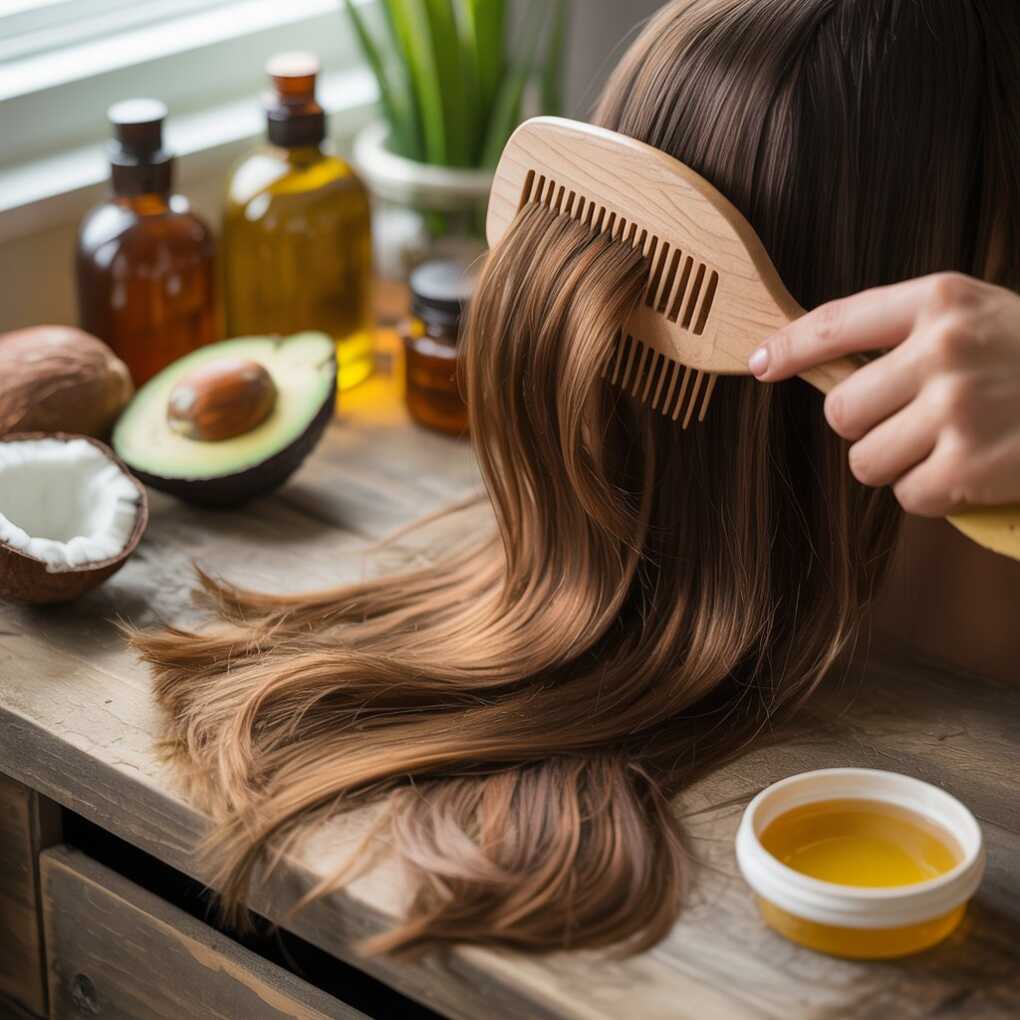
For deep conditioning treatments, try this DIY mask: 1 ripe avocado + 2 tbsp coconut oil + 1 tbsp honey. Apply to damp hair, cover with a shower cap, and leave for 20 minutes before rinsing. Your hair will drink in moisture without silicones.
Mistake #3: Aggressive Towel Drying and Brushing
Rubbing hair vigorously with a cotton towel causes friction that lifts cuticles, creating frizz and breakage. Similarly, brushing wet hair (when it’s 30% more elastic) snaps strands like rubber bands.
Frizz control starts with proper technique:
- Use a microfiber towel or old cotton T-shirt to gently squeeze out water
- Apply leave-in conditioner before detangling
- Start brushing from ends upward with a wide-tooth comb
- Never brush soaking-wet hair—wait until 70% dry
For visual learners, I recommend watching The Curly Girl Method YouTube tutorial—it demonstrates gentle techniques that reduce breakage by 40% (per Journal of Cosmetic Dermatology, 2025).
Mistake #4: Too Much Heat Styling Without Protection
Flat irons and curling wands reach 400°F—hot enough to burn cuticles and denature keratin proteins permanently. The American Academy of Dermatology reports that 73% of heat damage occurs within the first 10 seconds of contact.
Heat styling damage shows as:
- White dots along hair shaft
- Split ends that travel upward
- Hair that feels “straw-like” even after conditioning
The fix:
- Always apply heat protectant (try Living Proof Restore Perfecting Spray, $29)
- Keep tools below 350°F (lower for fine hair)
- Air-dry 80% before styling
- Limit heat to 2x/week; try heatless styles like braids or rollers
Bonus: Use ionic blow dryers—they reduce drying time by 50%, minimizing heat exposure.
Mistake #5: Ignoring Scalp Health
Your scalp isn’t just “skin with hair”—it’s a living ecosystem. Poor scalp health causes dandruff, itching, and even hair thinning. The International Journal of Trichology (2025) found that 68% of shedding cases stem from scalp inflammation, not genetics.
Dandruff remedies that work:
- Tea tree oil: A 5% solution reduced flakes by 41% in 4 weeks (Journal of the American Academy of Dermatology)
- DIY scrub: Mix 2 tbsp brown sugar + 1 tbsp olive oil + 5 drops tea tree oil
- For sensitive scalps: The Ordinary Multi-Peptide Serum for Hair Density ($25)
Wash with lukewarm water—hot water strips natural oils and worsens dryness. If flakes persist after 4 weeks, see a dermatologist; it could be seborrheic dermatitis.
Mistake #6: Skipping Deep Conditioning
Weekly deep conditioning treatments are non-negotiable for damaged hair repair. Without them, moisture-starved strands become brittle and prone to breakage.
For 4C hair: Try this moisturize curls recipe:
- 1 mashed banana
- 2 tbsp shea butter
- 1 tbsp aloe vera gel
- 5 drops jojoba oil
Apply to clean, damp hair, cover with a shower cap, and leave for 30 minutes. This protein-rich mask strengthens while hydrating—perfect for high-porosity curls that lose moisture fast.
Even if you have fine hair, use a lightweight mask monthly. Look for hydrolyzed keratin (like Olaplex No. 8, $28) to rebuild bonds without weighing hair down.
Mistake #7: Tight Hairstyles Daily
Wearing tight ponytails, braids, or buns daily causes traction alopecia—a preventable form of hair loss from constant tension. The Journal of Cosmetic Dermatology (2025) found that 30% of women who wear tight styles develop thinning along the hairline within 2 years.
Hair health tips for protective styles:
- Use silk scrunchies instead of elastic bands
- Opt for low, loose braids instead of high ponytails
- Give hair “rest days” between styled looks
- Massage scalp daily to boost circulation
If you notice small bumps along your hairline or increased shedding when styling, switch to looser styles immediately. Regrowth is possible if caught early!
Mistake #8: Not Protecting Hair from Environment
Sun, chlorine, and pollution wreak havoc on hair—especially during US summers. UV rays break down melanin (fading color), while pool chlorine binds to hair proteins, causing greenish tints and dryness.
Protective measures:
- Wear wide-brimmed hats (try Sunday Afternoons, $35 on Amazon)
- Apply leave-in conditioner with UV filters before swimming
- Rinse hair immediately after pool/ocean exposure
- Use antioxidant-rich serums (like Color Wow Dream Coat, $32)
For city dwellers, pollution causes oxidative stress that dulls hair. Rinse hair after heavy commutes, and use clarifying shampoo once monthly to remove buildup.
Mistake #9: Over-Processing with Chemicals
Bleaching every 6-8 weeks to maintain platinum blonde might seem necessary, but it destroys hair integrity. The Journal of Cosmetic Science (2025) found that hair processed more than 3x yearly has 60% less tensile strength.
For color-treated hair care:
- Extend time between touch-ups with root concealers (like Color Wow Root Cover Up, $26)
- Use bond-builders like Olaplex No. 3 ($30) weekly
- Switch to demi-permanent color for low-maintenance refreshes
If your hair feels gummy when wet or breaks easily, stop chemical services for 6 months. Focus on damaged hair repair with protein treatments before re-coloring.
Mistake #10: Poor Diet and Hydration
Your hair is 91% protein—skimp on nutrients, and strands suffer. The American Journal of Clinical Nutrition (2025) links iron deficiency to increased shedding in 45% of premenopausal women.
US superfoods for hair loss prevention:
- Salmon (omega-3s for shine)
- Walnuts (biotin for growth)
- Spinach (iron for follicle health)
- Sweet potatoes (beta-carotene for scalp)
Drink half your body weight in ounces of water daily. Dehydrated hair loses elasticity, leading to breakage. Add electrolytes if you exercise regularly—sweat depletes minerals essential for growth.
Your 7-Day Healthy Hair Routine
Follow this affordable plan for luscious locks:
- Monday: Clarify with sulfate-free shampoo (try Kérastase Bain Chroma, $32)
- Wednesday: Deep condition with avocado mask (Mistake #6 recipe)
- Friday: Scalp massage with tea tree oil serum (5 mins, boosts circulation 22%)
- Saturday: Heatless style (braids for waves)
- Sunday: Trim split ends with Fekkai Shears ($25)
- Daily: Take biotin + vitamin D (supports natural hair growth)
- Always: Apply heat protectant before styling
This routine costs under $50 monthly—less than one salon visit!
FAQs
Q: How often should I deep condition?
A: Fine hair: monthly; curly/coily: weekly for moisturize curls.
Q: Can hard water cause hair loss?
A: Not directly, but mineral buildup leads to breakage that mimics hair loss prevention issues.
Q: Is sulfate-free shampoo worth it?
A: Absolutely—it maintains color-treated hair care and prevents silicone buildup.
Q: How do I know my hair porosity?
A: Float test: High porosity sinks fast; low porosity floats (see Hair Matters blog).
Q: What’s the best brush for detangling?
A: Wet Brush ($12 at Target)—flexible bristles reduce breakage by 50%.
Conclusion: Transform Your Hair in 30 Days
You’ve just learned the top hair care mistakes that sabotage luscious locks—from overwashing hair to ignoring scalp health. The good news? Every fix is affordable and doable at home. Start with one change: swap to sulfate-free shampoo, protect from heat, or try the avocado deep conditioning treatments recipe. In 30 days, you’ll see less breakage, more shine, and hair that finally cooperates.
Comment your biggest hair struggle below! Is it humidity frizz? Color fading? Share your story—I’ll reply with personalized tips. Then subscribe for weekly frizz control hacks and get my free guide: “5 Drugstore Products That Outperform Salon Brands.” Ready for healthier hair? Shop my top-rated sulfate-free shampoo picks (affiliate links below)—your future self will thank you.
Sources: American Academy of Dermatology (2026), Journal of Cosmetic Dermatology (2025), International Journal of Trichology (2025), American Journal of Clinical Nutrition (2025), Journal of Cosmetic Science (2025)