
Over 20% of Black women in the United States wear locs, making dreadlocks one of the most beloved and culturally rich protective styles in the country. Whether you’re just starting your loc journey or you’ve been rocking mature dreads for years, one truth never changes: beautiful locs don’t happen by accident. They’re the result of a consistent, intentional care routine.
If you’ve ever dealt with frizzy ends, product buildup, a dry scalp, or locs that just won’t tighten the way you want, you already know how frustrating it can be to find real answers. This guide is here to change that. We’re covering 10+ proven tips for maintaining dreadlocks hair — from your dreadlock washing schedule and retwisting technique to moisture retention, scalp health, and seasonal care. Whether you’re in the humid heat of Miami, the dry winters of Denver, or the smog-heavy streets of Los Angeles, this loc care routine is built for your real life.
Let’s get into it.
Understanding Your Locs: Starter vs. Mature Dreads
Before diving into specific tips, it’s important to recognize that not all locs are the same — and your care routine should reflect where you are in your loc journey.
New Locs (0–6 Months)
The first six months are often called the “baby loc” phase, and this stage requires the most patience. Your hair is actively locking, which means it may look frizzy, unraveled at the ends, or uneven. This is completely normal. During this stage:
- Avoid washing too frequently. Every 2–3 weeks is ideal for new locs so the hair can knit together without being disrupted.
- Choose your locking method wisely. The most common starting methods in the US are the palm rolling technique, two-strand twists, backcombing, and interlocking. Hair type plays a big role here — 4C coils tend to lock the fastest due to their tight curl pattern, while looser textures (3B–4A) may need more time and support.
- Watch out for chlorine. If you’re a swimmer or gym-goer in the summer, chlorine can weaken and dry out your locs before they’re fully formed. Always wear a swim cap or rinse immediately after pool time.
Teen Locs (6 Months–1 Year)
Around the 6-month mark, you’ll notice your locs beginning to “bud” — small, firm knots forming throughout the length. The hair is gaining structure and you can start washing more regularly (every 1–2 weeks). Frizz is still common but will reduce over time.
Mature Dreads (1+ Years)
Mature dreads are fully locked, denser, and far more forgiving. You’ll have more flexibility with washing, styling, and products. However, mature locs can also accumulate buildup faster, so scalp health for locs becomes a higher priority. This is also the stage where dreadlock moisture retention becomes critical — longer, thicker locs can dry out from the inside out if not properly hydrated.
Reader Testimonial: “I was so discouraged during my first year. My locs looked messy and I almost gave up. But now, at three years in, people stop me on the street in Atlanta asking who does my hair. The key was patience and staying consistent with my routine.” — Jasmine T., Atlanta, GA
Daily and Weekly Loc Care Routine
Consistency is the backbone of any successful loc care routine. Here’s what a healthy weekly rhythm looks like:
Daily Habits
- Pat, don’t rub. When drying your locs or applying products, always pat gently. Rubbing creates frizz and can loosen new growth at the roots.
- Protect your locs at night. Sleep with a satin or silk bonnet, or use the pineapple method (loosely gathering locs at the top of your head) to reduce friction, breakage, and frizz while you sleep. A satin pillowcase works as a backup.
- Hydrate throughout the week. A light spritz of water mixed with a few drops of jojoba oil or rose water keeps locs from getting stiff and brittle between wash days.
Weekly Scalp Care
Scalp health for locs is often underestimated, but a healthy scalp is the foundation for healthy hair growth. Once a week:
- Give yourself a scalp massage using a lightweight oil like jojoba, tea tree, or peppermint oil. These oils balance the scalp’s natural sebum without causing buildup.
- Check the roots for lint, product residue, or early signs of thinning — both common culprits if ignored for too long.
- Avoid applying heavy butters or creams directly to the scalp. These clog follicles and are a leading cause of buildup in locs.
Dreadlock Washing Schedule by Maturity Level
| New Locs (0–6 mo) | Teen Locs (6–12 mo) | Mature Dreads (1+ yr) | |
|---|---|---|---|
| Wash Frequency | Every 2–3 weeks | Every 1–2 weeks | Every 1–2 weeks |
| Recommended Products | Residue-free shampoo | Residue-free or diluted shampoo | Clarifying or ACV rinse |
| Drying Tips | Air dry fully; avoid manipulation | Air dry or diffuse on low | Microfiber towel + air dry |
| Key Priority | Loc formation | Budding and tightening | Moisture and buildup prevention |
Washing and Drying Best Practices
Washing your locs properly is one of the most important tips for maintaining dreadlocks hair — and one of the most misunderstood.
Choosing the Right Shampoo
The golden rule of loc washing: always use a residue-free shampoo for locs. Regular shampoos and conditioners leave behind moisturizing agents, silicones, and proteins that sit inside your locs and cause buildup over time. Popular US options include:
- Dollylocks Nourishing Loc Shampoo — a cult favorite available on Amazon, free of residue and harsh sulfates
- Bronner’s Pure-Castile Liquid Soap (diluted) — affordable, natural, and widely available at Target and Whole Foods
- Homemade ACV Rinse for dreadlocks — mix 1 part apple cider vinegar with 3 parts water for a clarifying rinse that removes buildup, balances scalp pH, and adds shine
Step-by-Step Wash Routine
- Section your locs loosely using clips or scrunchies before getting in the shower. This reduces tangling and makes rinsing more thorough.
- Dilute your shampoo in a squeeze bottle with water (about 1:3 ratio). Apply directly to the scalp and work it in with your fingertips — not your palms.
- Squeeze, don’t scrub. Work the shampoo down the length of each loc by squeezing rather than rubbing.
- Rinse thoroughly. Leftover shampoo is a top cause of buildup and mildew smells. Rinse each section of locs completely.
- Dry completely before bed. This is non-negotiable. Locs that stay damp develop mildew odors quickly — a common complaint among loc wearers in humid climates like Florida, Houston, and the Carolinas. Air dry in a warm space or use a hooded dryer on low heat. Avoid going to sleep with wet locs.
Climate Note: If you’re in the arid Southwest (Arizona, Nevada, New Mexico), your locs may dry out quickly after washing. Follow up with a lightweight leave-in mist to replenish lost moisture before your locs are fully dry.
Retwisting and Tightening Techniques
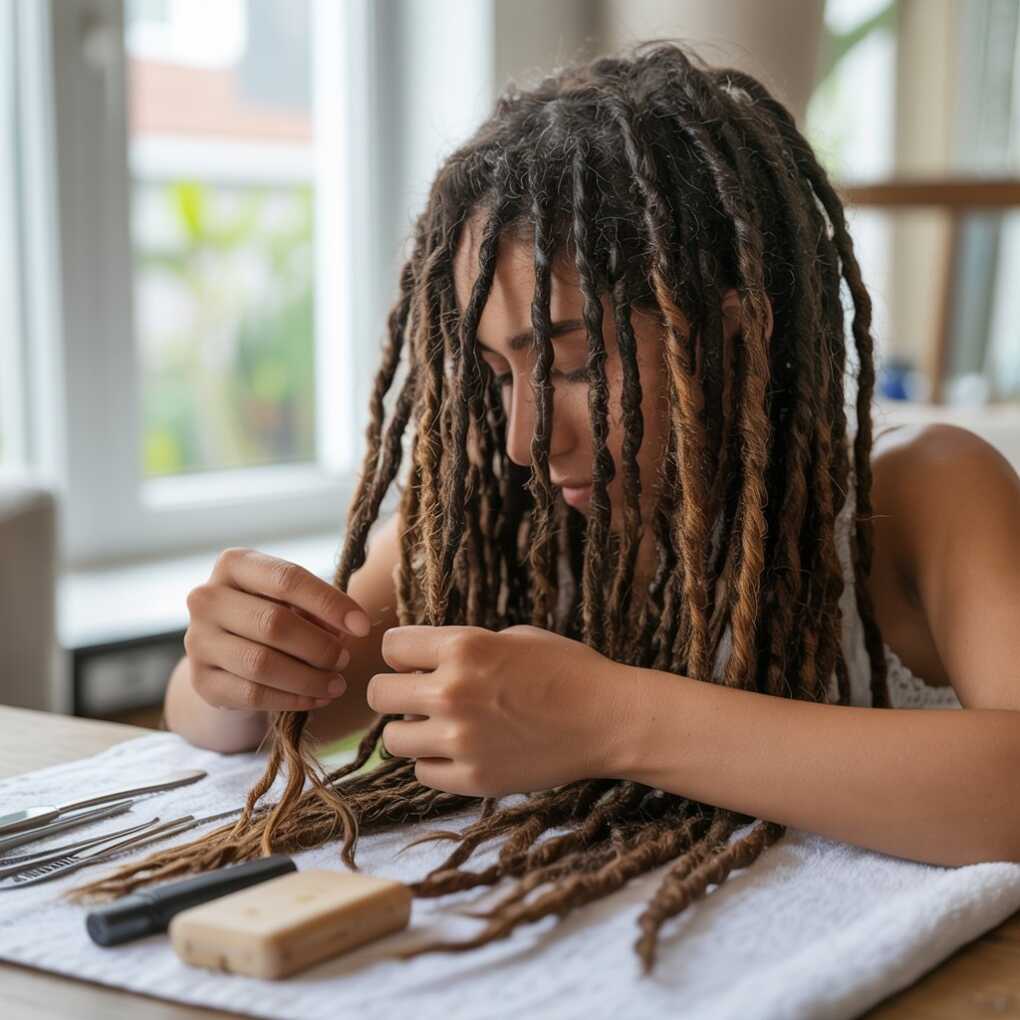
Retwisting dreads at home is a skill worth mastering — it’ll save you hundreds of dollars a year and give you more control over your loc maintenance schedule.
How Often Should You Retwist?
This depends on your hair growth rate and the look you prefer, but most loc wearers retwist every 4–8 weeks. Retwisting too frequently can thin the roots over time, a condition called traction alopecia. Let your new growth develop a bit before tightening.
Palm Rolling Technique
The most widely used method for maintaining round, cylindrical locs is the palm rolling technique:
- Apply a small amount of loc gel or loc butter to the roots of a clean, slightly damp loc.
- Place the loc between both palms.
- Roll firmly in one direction (clockwise for most) with consistent, even pressure.
- Pin the loc with a clip and move to the next section.
- Sit under a hooded dryer or allow to air dry completely before removing clips.
Interlocking Dreads vs. Crocheting
Two alternative tightening methods gaining popularity in the US:
- Interlocking dreads: A tool is used to pull the loc through its own root, creating a tighter, longer-lasting hold. Great for active lifestyles (gym regulars, swimmers) because it holds through sweat and washing.
- Crochet method: A fine crochet hook is used to pull loose hairs into the loc body. This method delivers instant results but should be done sparingly to avoid weakening the loc’s internal structure.
Loc Retwist Kit Essentials
Every home retwist kit should include:
- Rat-tail comb for clean sectioning
- Butterfly clips or duckbill clips to hold finished locs
- Residue-free loc gel (try Jamaican Mango & Lime Locking Jelly, available on Amazon)
- A spray bottle for water or diluted product
- A hooded dryer (optional but helpful)
Moisture, Products, and Styling
Dreadlock moisture retention is the single most underrated aspect of loc care, especially for mature dreads and for those with naturally drier hair textures (4B/4C).
Moisture First, Always
Locs need water-based moisture, not just oil. A good rule: water hydrates, oil seals. Start with a water spritz or water-based leave-in, then seal with an oil to lock it in.
Top Dreadlock Products for Black Hair
These products are widely available at Target, Ulta, or on Amazon:
- SheaMoisture Jamaican Black Castor Oil Leave-In Conditioner — excellent for sealing moisture and reducing breakage at the roots
- Cantu Shea Butter Daily Oil Moisturizer — lightweight and affordable for daily spritzing
- Taliah Waajid Lock It Up — a longtime community favorite for starter and mature locs alike
- Sunny Isle Jamaican Black Castor Oil — great for scalp massages and root strengthening
- Mielle Organics Rosemary Mint Scalp & Hair Strengthening Oil — a bestseller for scalp health and length retention
Essential Oils for Loc Health
Adding a few drops of essential oils to your carrier oil can boost scalp and loc health:
- Tea tree oil — antifungal, great for preventing scalp buildup or dandruff
- Peppermint oil — stimulates blood flow to the scalp and encourages growth
- Lavender oil — calming, antibacterial, and balances the scalp’s oil production
Dreadlock Styling Ideas
Healthy locs are versatile locs. A few crowd-favorite styles:
- Updos and buns — sleek and professional for the workplace; use a satin-lined scrunchie to protect roots
- Half-up, half-down — a go-to for summer festivals or casual outings
- Men’s tapered fade with locs — pairing locs with a clean fade is one of the most popular barbershop requests across the US right now
- Loc jewelry and wraps — gold rings, shells, and fabric wraps add personality and are gentle on the loc structure
Troubleshooting Common Loc Issues
Even the most diligent loc wearer hits a rough patch. Here’s how to address the most common problems:
- Buildup: Clarify monthly with an ACV rinse or a clarifying shampoo. Reduce heavy product use at the scalp.
- Thinning roots: Cut back on retwisting frequency. Massage the scalp daily and try a strengthening oil like Jamaican black castor oil.
- Mildew or musty smell: Always dry locs fully after washing. Use a scalp spray with tea tree oil between washes.
- Loc frizz: Avoid rubbing locs with towels. Use a microfiber cloth instead and seal with a light oil when damp.
- Lint and debris: Use a lint roller lightly along the surface and opt for seamless silk bonnets over cotton ones.
Conclusion: Your Locs, Your Journey
Maintaining dreadlocks hair is less about perfection and more about consistency. The best loc care routine is one you can actually stick to — simple, intentional steps that work with your lifestyle, your climate, and your hair type.
To recap the top five tips: wash regularly with a residue-free shampoo, keep your scalp nourished and clean, retwist no more often than every four to six weeks, prioritize moisture before sealing with oil, and protect your locs at night. Follow those fundamentals and your locs will reward you with length, strength, and undeniable beauty.
Reader Testimonial: “I moved from New York to Phoenix and my locs went from thriving to completely dried out within months. Once I started spritzing with rosewater every other day and sealing with jojoba oil, everything changed. Climate matters more than people realize.” — Marcus L., Phoenix, AZ
Whether you’re just starting out or celebrating a decade of loc life, remember: every loc journey is different, and yours is worth celebrating.
Share your loc journey in the comments below — we’d love to see your progress!
Frequently Asked Questions
How often should I retwist my dreads? Most loc wearers retwist every 4–8 weeks. Retwisting more frequently risks thinning at the roots over time.
What’s the best shampoo for starter locs? Use a residue-free shampoo like Dollylocks or diluted Dr. Bronner’s Castile Soap. Avoid regular conditioners and creamy products that cause buildup.
Can I retwist my own locs at home? Absolutely. With the right tools — rat-tail comb, clips, loc gel, and a spray bottle — the palm rolling technique is easy to learn and very effective for maintaining clean, round locs.
How do I keep my locs moisturized in winter? Increase your spritzing frequency to every 1–2 days, use a heavier sealing oil like castor oil, and cover your locs with a hat lined with satin when going outside in cold weather.